Grand Rapids City Commission Advances New Mixed-Use Zoning Ordinance
The Grand Rapids City Commission voted 5-2 on Wednesday to approve a comprehensive zoning ordinance aimed at increasing residential density and encouraging mixed-use developments near transit hubs.
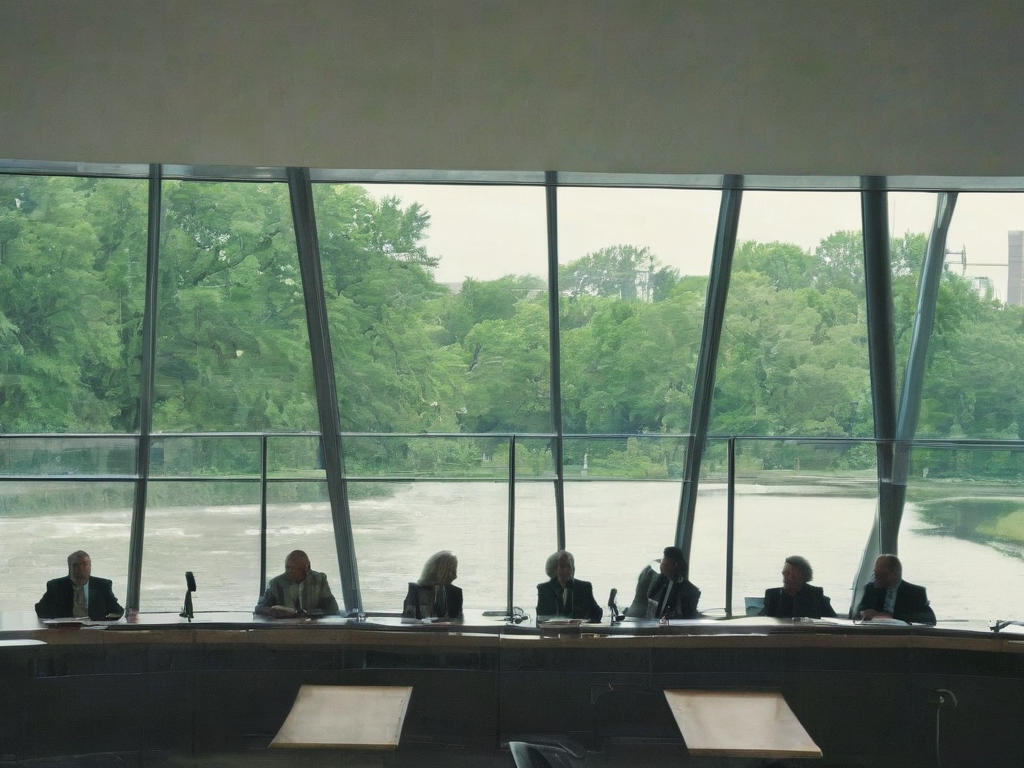
The Grand Rapids City Commission voted 5-2 on Wednesday, March 25, 2026, to approve the new Mixed-Use Density Zoning Ordinance. The measure, which was introduced by the Planning, Zoning, and Building Committee, seeks to revise current land use codes to allow for higher residential densities in neighborhoods near the Grand River and major arterial roads like Wealthy Street.
City Commissioner Sarah Jenkins, who sponsored the resolution, stated that the change is critical for addressing the city's housing affordability crisis. 'We are looking at a future where people want to live closer to the transit and the downtown core, and we need the zoning to reflect that demand,' Jenkins told the commission. The ordinance specifically targets zones near the GVSU campus, the Van Andel Arena, and the Spectrum Health headquarters in Eastown.
Under the new rules, developers will be permitted to build up to 120 residential units per acre in designated mixed-use corridors, a significant increase from the previous limit of 80 units. The proposal also introduces 'form-based codes' that focus on the physical form of buildings rather than their use, allowing for ground-floor retail or commercial space with apartments above, similar to models seen in the Fulton Street district.
The zoning change faces opposition from the neighborhood association in Heritage Hill, which argued that the density could strain local infrastructure. 'We love a vibrant city, but we don't want to turn Heritage Hill into a concrete jungle,' said resident Mark Thompson during public comment. However, City Commissioner David Miller defended the measure, noting that Heritage Hill is not a primary target and that the ordinance includes strict design guidelines to maintain the area's historic character.
The vote was split along party lines, with all five Republicans voting in favor and the two Democrats, Commissioners Lisa Albrecht and John Smith, voting against it. Albrecht expressed concern that the proposal lacks sufficient community engagement prior to the vote. 'We need more town halls and a clearer impact study before we lock in these permanent changes,' she said. Smith echoed these sentiments, suggesting a delay to allow for further public review.
If approved, the new zoning ordinance will take effect on July 1, 2026, pending a final review by the Kent County Planning Commission. Developers who wish to utilize the new density allowances must submit a site-specific plan that demonstrates compliance with the new design standards and traffic impact studies. The city expects that the new rules will attract more private investment into previously underutilized parcels along the Grand River corridor.
City Manager Robert Hayes noted that the commission's decision marks a pivotal moment in Grand Rapids' long-term growth strategy. 'This isn't just about building more homes; it's about creating neighborhoods that are walkable, connected, and economically sustainable,' Hayes said in a statement following the vote. He added that the city will immediately begin working on updating the downtown comprehensive plan to align with the new zoning framework.